Tree trimming and pruning across the NRV
Limbs off the roof, deadwood out of the canopy, and shrubs cut back into a shape they can hold. Cut where the tree can seal, not just where the ladder reaches.
Trimming is the cheapest tree work there is and the easiest to put off. A limb that costs a little to take off now becomes a removal after it comes through the roof.
The usual reasons people call
- Clearance. Branches on the roof, scraping siding, blocking the driveway, or hanging over where the kids play. Limbs resting on shingles hold moisture and take years off a roof.
- Deadwood. Dead limbs in a live canopy come down eventually, and always in weather. Taking them out is a normal maintenance job, not a crisis.
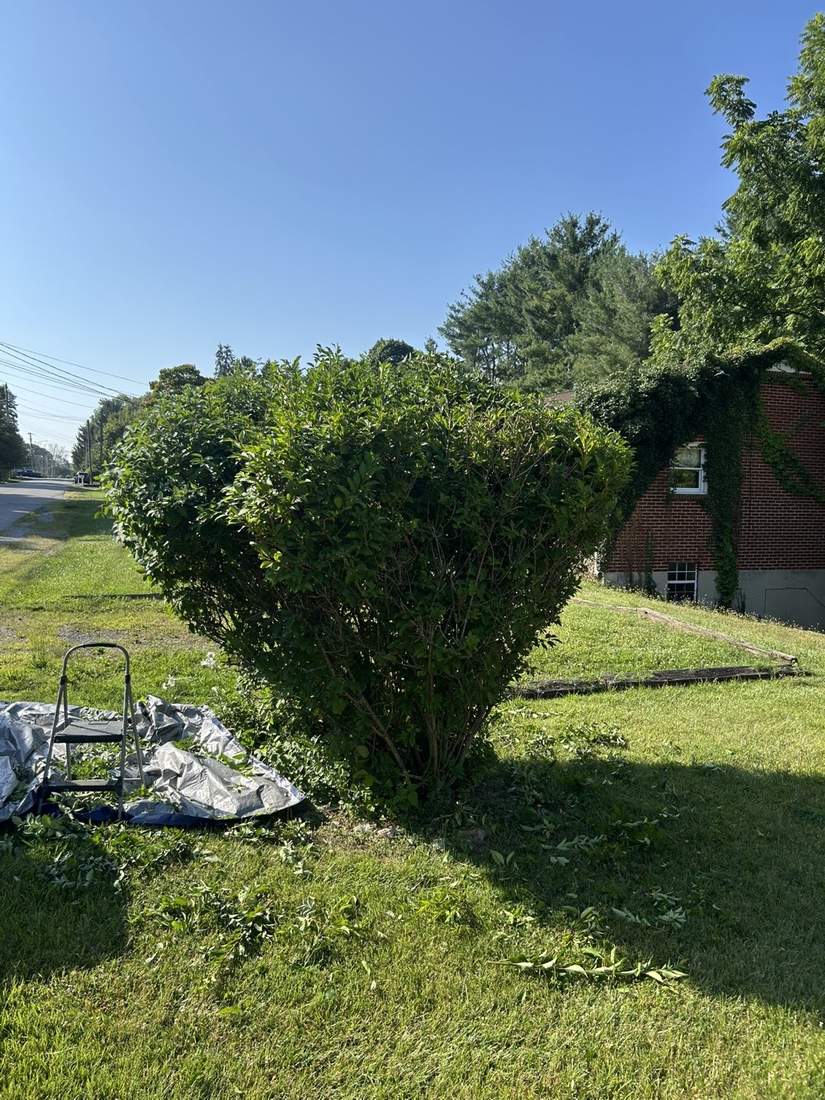
- Shape. An ornamental that's gone lopsided, a hedge that's outgrown the window, a shrub that swallowed the front walk.
- Light. Thinning a canopy so grass has a chance underneath — often the real fix for a thin patch of lawn that keeps getting reseeded.
Cut placement matters
A tree seals a wound at the branch collar, that slight swelling where the limb meets the trunk. Cut just outside it and the tree closes over the spot in a season or two. Cut flush and it can't, so decay walks straight into the trunk. Leave a long stub and it dies back and rots.
It's a small distinction that shows up five years later, which is why it's worth having somebody do it who has taken down what happens when it's done wrong.
Topping
Trevor doesn't top trees. Cutting the crown back to stubs makes a tree throw dozens of weak shoots off the cut, and those shoots are attached poorly and break easily. A topped tree is more dangerous in ten years than the tree you started with, and it never looks right again. If a tree is genuinely too big for where it is, the honest answer is a proper reduction or a removal, not a haircut that makes the problem worse.
When to do it
Most hardwoods here prune best in the dormant season — roughly late fall through early spring — when the structure is visible and the tree isn't pushing growth. Deadwood and anything actively hazardous can come out any time of year. Spring-flowering shrubs like forsythia and lilac get cut right after they bloom, or you cut off next year's flowers.
Trimming runs across Christiansburg, Blacksburg, Roanoke, and Floyd, and it pairs naturally with a mowing schedule — Trevor is already there.
Rough timing
Late fall – early spring: structural pruning on most hardwoods
Any time: deadwood and hazard limbs
Right after bloom: forsythia, lilac, and other spring bloomers